




Endodontics
Endodontics is the branch of dentistry that saves an infected tooth by cleaning, shaping and sealing its root canals. The work runs on files, irrigants, medicaments, gutta-percha, sealers and rubber-dam isolation, from makers like Dentsply, Mani, Meta Biomed, Woodpecker and Waldent. Each canal is opened, disinfected, dried, then filled so the tooth stays.
 Recommended
 Price- High to LowPrice- Low to High




 49
49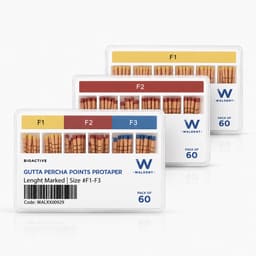


Endodontics — Files, Irrigants, Sealers and the Root-Canal Tray
A root canal treats the tooth from the inside: the inflamed or dead pulp is removed, the canal is widened and disinfected, and the empty space is filled and sealed so bacteria cannot return. This category holds everything that sequence needs, from the first hand file that finds the canal to the sealer that closes it. The specialist material for each stage lives in its own section — this page maps how those pieces fit together across a single appointment.
What the treatment moves through, stage by stage
Access and shaping — hand and rotary files
The canal is first found and made patent with fine stainless-steel hand files worked by feel, then widened to a smooth taper. Motor-driven heat-treated NiTi files do the bulk of the widening in fewer passes, flexing around curves that would stress a stiffer instrument. Gold-alloy rotary sets like the Waldent Premium Taper handle that shaping stage.
Irrigation and disinfection
Files cut dentine, but the bacteria live in fins and tubules a blade never touches — so the canal is flushed throughout. Sodium hypochlorite dissolves tissue and kills bacteria, EDTA lifts the smear layer that shaping leaves behind, and the two are alternated to leave a clean wall. Sodium-hypochlorite solutions like SafeEndo Hypochlor cover that side of the rinse.
Between-visit dressings and repair cements
When a canal is left infected between appointments, a calcium-hydroxide dressing holds the bacteria down until the next visit. Where the tooth needs a hard-setting seal against tissue — a perforation, an open apex, a pulp cap — a bioceramic or MTA cement is placed instead — a ready-mixed MTA putty is the simplest repair option here.
Drying, filling and sealing the canal
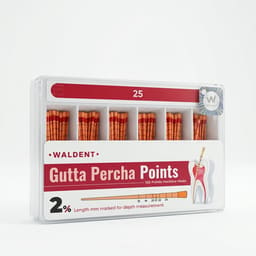
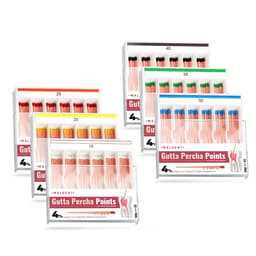
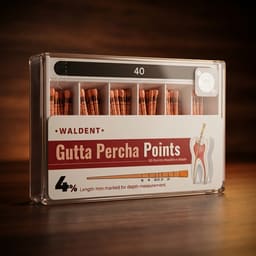
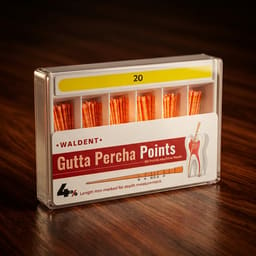
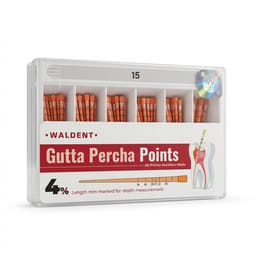
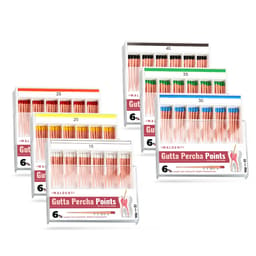
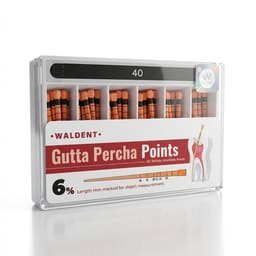
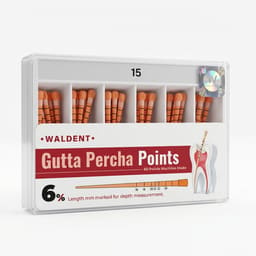
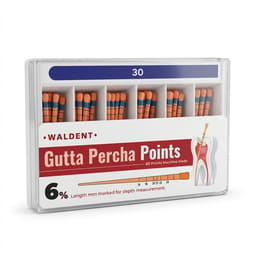
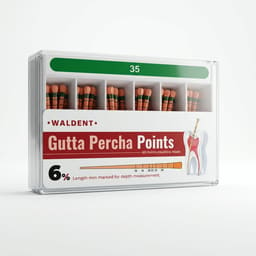
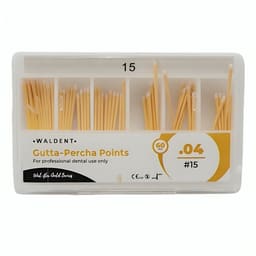
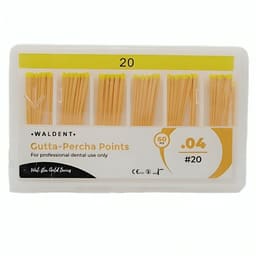
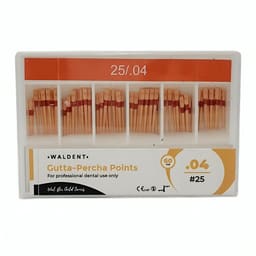
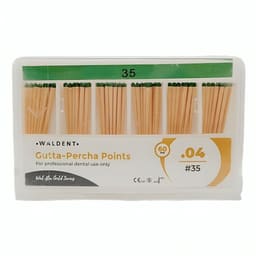
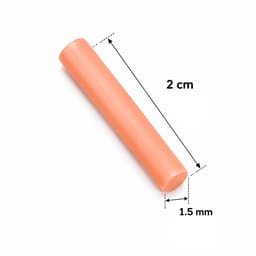
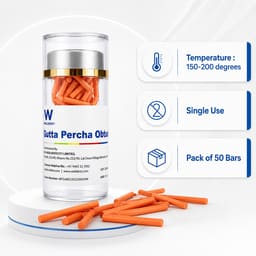
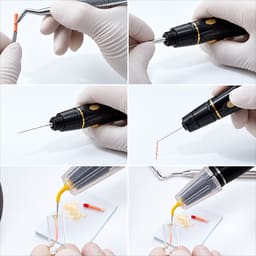
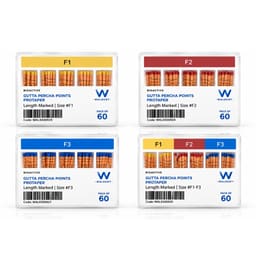
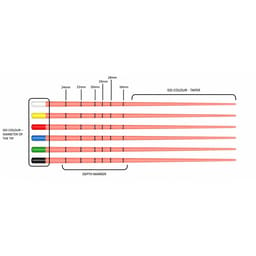
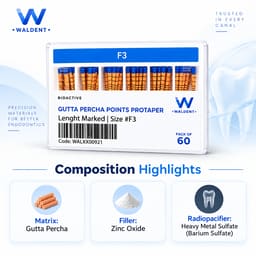
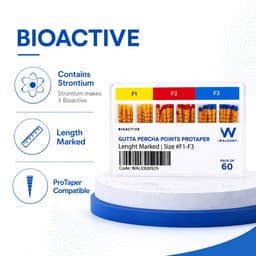
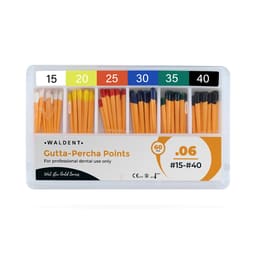
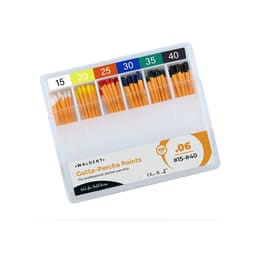
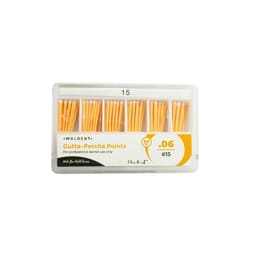
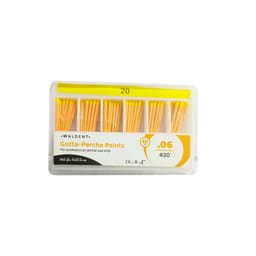
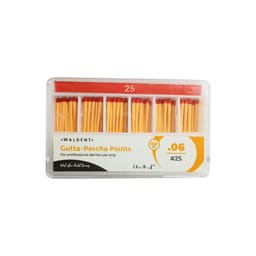
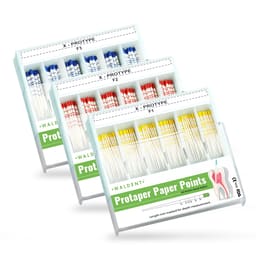
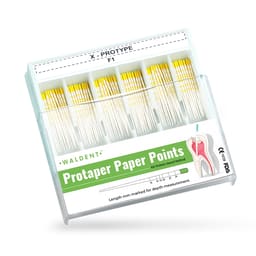
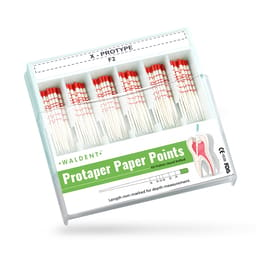
Once clean, the canal is dried with absorbent points, then filled: a gutta-percha core takes up the bulk of the space and a sealer wets the walls and fills what the core cannot. These sit in their own sections — Paper Points for drying, the Obturation range for cores and carriers, and the Root Canal Sealers for the cement that closes the interface.
Isolation and length control
Two things run underneath the whole procedure. A rubber dam seals the tooth off from saliva and catches a file before it can be swallowed, and an electronic apex locator reads where the root ends so nothing is over-instrumented. Both have dedicated ranges — the Rubber Dam Sheet for isolation and the Apex Locators for working length.
Where each item comes into the appointment
- Finding and negotiating the canal with fine stainless-steel K-files before any widening begins
- Widening to a taper with a rotary or reciprocating NiTi system
- Flushing with hypochlorite and EDTA between every file
- Confirming working length on the apex locator, checked against a radiograph
- Dressing an infected canal with calcium hydroxide between visits
- Repairing a perforation or capping a vital pulp with MTA or a bioceramic
- Drying with paper points, then obturating with gutta-percha and sealer
- Preparing post space and cementing a fibre post before the final restoration
Building the tray — what to weigh
- Hand, rotary or reciprocating — hand files give the feel a fine or calcified canal needs; rotary NiTi shapes routine cases faster and rounder; a reciprocating single file cuts the instrument count. Most trays carry all three for different canals. The Endodontics blog goes deeper on alloys and file choice.
- Alloy and heat treatment — gold and controlled-memory NiTi flex further and resist fracture in curved canals, worth the step up where anatomy is severe.
- Sealer chemistry — bioceramic sealers bond to dentine and suit a single-cone fill; resin sealers give documented handling and easier retreatment; pick to the obturation technique, not the other way round.
- Obturation method — single-cone with a bioceramic for round rotary preparations, cold lateral for oval canals, warm carrier-based for complex systems.
- Isolation and irrigation you will actually reuse — a latex-free dam for sensitive patients, side-vented irrigation needles that push solution apically without a jet.
Names on the shelf
Files come from Dentsply, Mani, Woodpecker, NeoEndo and Waldent across hand, rotary and reciprocating systems. Sealers and repair cements run from Ammdent, Maarc, SafeEndo and DPI through to Angelus and Ultradent for MTA and calcium hydroxide.
Irrigants, paper points, gutta-percha and rubber-dam kits fill in around them from Prime Dental, Sure Endo, Oro, Vishal Dentocare and Waldent, so a clinic can assemble a full endodontic tray without leaving the category.
Why order the category here
Root canal work fails at its weakest step — an undried canal, a file used one molar too many, a sealer that never bonded — so the value is in getting the whole sequence right, not any single item. Keeping files, irrigants, medicaments, obturation and isolation orderable together lets a practice restock the exact stage that ran low and keep every appointment moving from access to final seal.
Frequently Asked Questions (FAQs):
What does a root canal actually remove and replace?
It removes the pulp — the nerve and blood supply inside the tooth — once it is inflamed or infected beyond recovery. The canal that held it is then cleaned, shaped and disinfected, and refilled with an inert core of gutta-percha and a sealer. The tooth keeps its crown and root but no longer has a living pulp, which is why it needs a solid final restoration afterwards.
Do I still need hand files if I use a rotary system?
Yes. A fine hand K-file is what first finds the canal, confirms it is patent to the apex, and scouts a glide path before any rotary instrument goes in. Rotary NiTi then does the efficient widening. Skipping the hand-file scouting step is a common cause of blocked canals and separated instruments, so the two are used together rather than one instead of the other.
Why is irrigation as important as the files?
Because files only touch the main canal wall, and infection also sits in fins, isthmuses and dentinal tubules a blade never reaches. Sodium hypochlorite dissolves and disinfects that tissue chemically, and EDTA removes the smear layer so the sealer can contact clean dentine. A well-shaped canal that was poorly irrigated is still an infected canal, which is why the rinse runs throughout the procedure.
When is MTA or a bioceramic used instead of a normal filling?
When the tooth needs a hard, tissue-friendly seal against living tissue or bone rather than a routine canal fill. That covers repairing a perforation, sealing an open immature apex, capping an exposed vital pulp, and root-end filling in surgery. These cements set in the presence of moisture and are biocompatible, which ordinary canal sealers and restorative materials are not built for.
Is a rubber dam really necessary for every root canal?
It is the standard of care, and for good reason. The dam keeps saliva and its bacteria out of a canal you have just spent the appointment disinfecting, and it stops a small file from being dropped into the throat or swallowed. It also keeps the irrigant off the soft tissues and gives a clean, dry, well-lit field. Skipping it undermines the disinfection the rest of the tray is there to achieve.